Parallel board crawlers
Naukri and LinkedIn workers run side by side toward one fresh-job target — selected keywords, AI top-up, or full auto mode.
Automation · 2026
Parallel Naukri + LinkedIn crawler with live browser view, freshness filters, and keyword-driven discovery
I built Job Crawler because manually refreshing Naukri and LinkedIn burns hours and still leaves you staring at stale listings. The job I wanted done: find fresh, relevant openings fast — then decide what to apply to without drowning in noise.
The stack is a Docker monorepo: a React dashboard, a REST API with SSE crawl logs, Playwright workers for Naukri and LinkedIn, and MongoDB for storage. Sessions persist after browser login so crawls can run with authenticated browsing — including a VNC-style view of the browser navigating job pages in real time.
The pipeline is deliberate: discover by keyword (selected, AI top-up, or full auto), filter freshness, validate open listings, score and tier matches against a resume profile, then export to Excel. Naukri and LinkedIn run in parallel toward a shared fresh-job target so progress is visible run by run.
This project lives on GitHub — clone the repo and run it locally with Docker. There is no public hosted demo.
Technical depth
Systems and patterns behind Job Crawler— the parts that don't show in a screenshot.
Naukri and LinkedIn workers run side by side toward one fresh-job target — selected keywords, AI top-up, or full auto mode.
Watch Playwright navigate listings in real time while the API streams crawl events over SSE into a terminal-style log view.
Skip aged postings, validate open listings, tier matches against a resume profile, then export filtered results to Excel.
Web, API, worker, and MongoDB compose up together — session login flows for both boards, cron-ready worker, and a single dashboard.
Walkthrough
Key screens from Job Crawler — what I built and why it mattered.
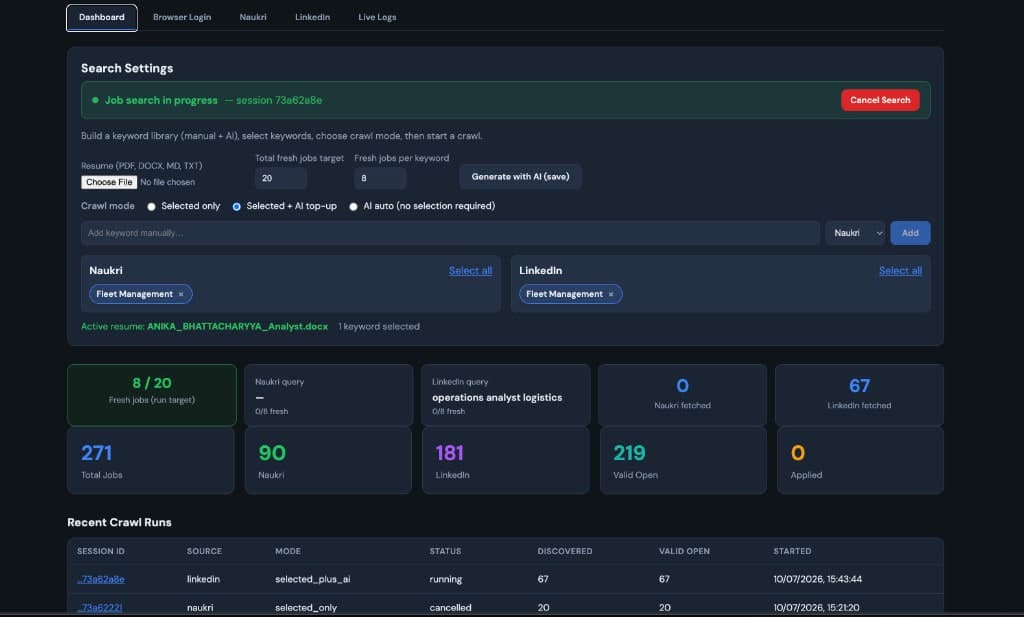
Search settings, keyword panels for Naukri and LinkedIn, crawl mode (selected + AI top-up), and live counters — fresh jobs toward target, fetched totals, and recent crawl runs.
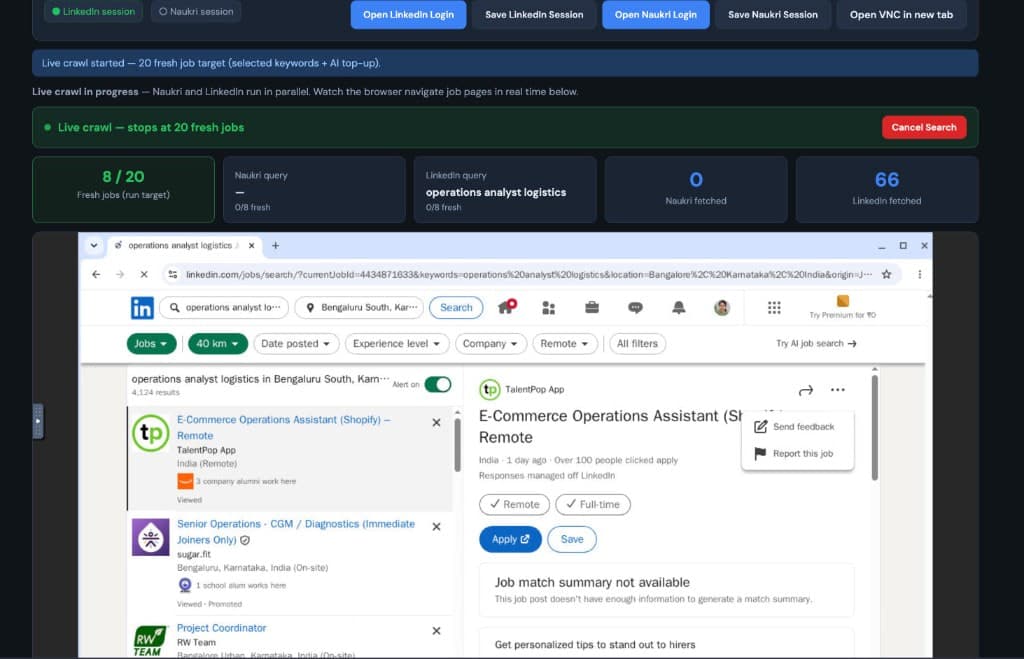
Session indicators, cancel controls, and a live browser pane so I can watch the worker navigate search results while metrics update in parallel.
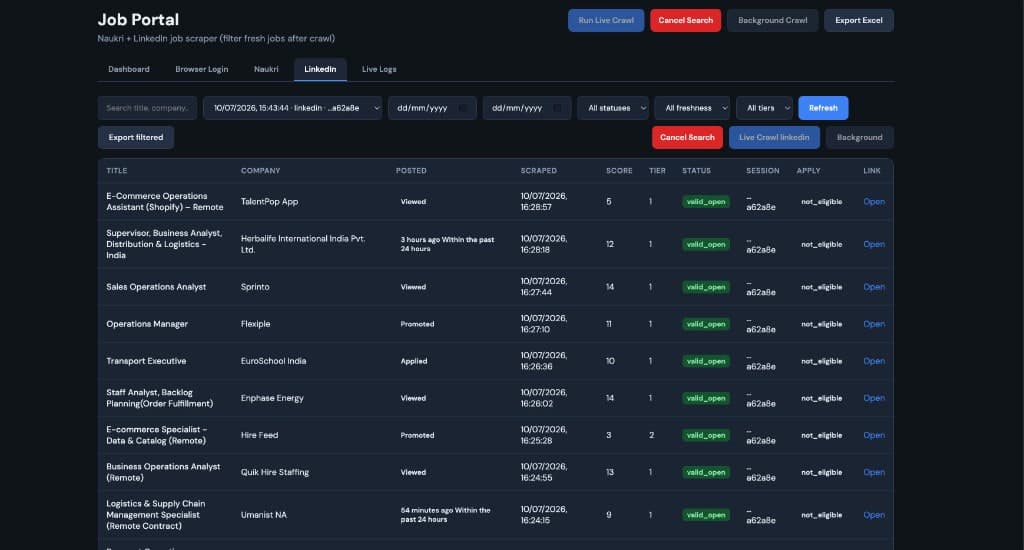
After a crawl, every listing lands in a filterable table — title, company, posted age, score, tier, status, and a direct open link — so I can triage fresh matches by keyword and session.
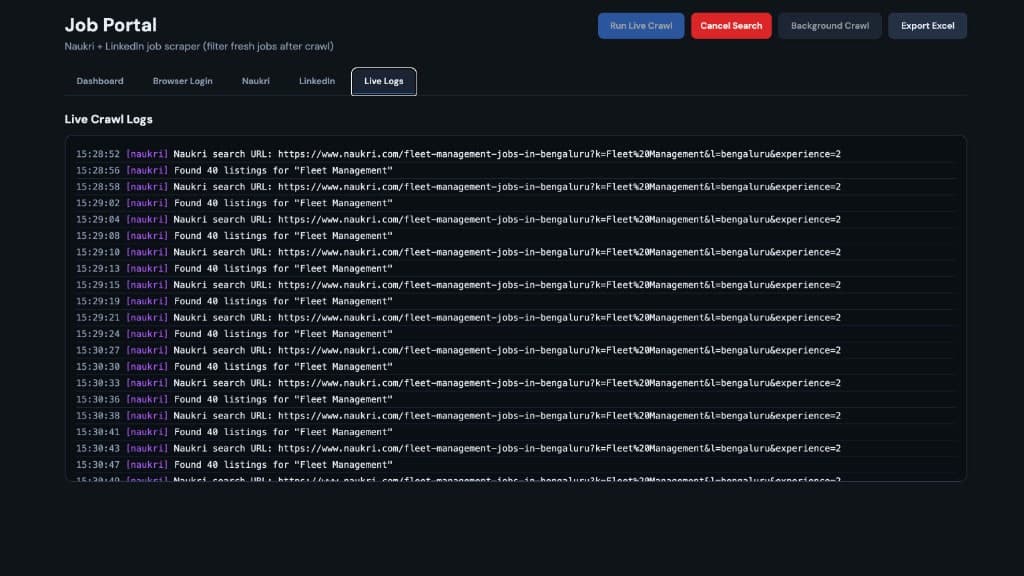
SSE-backed log stream with timestamps and source tags — search URLs, listing counts, and crawl steps as they happen, without refreshing the page.